

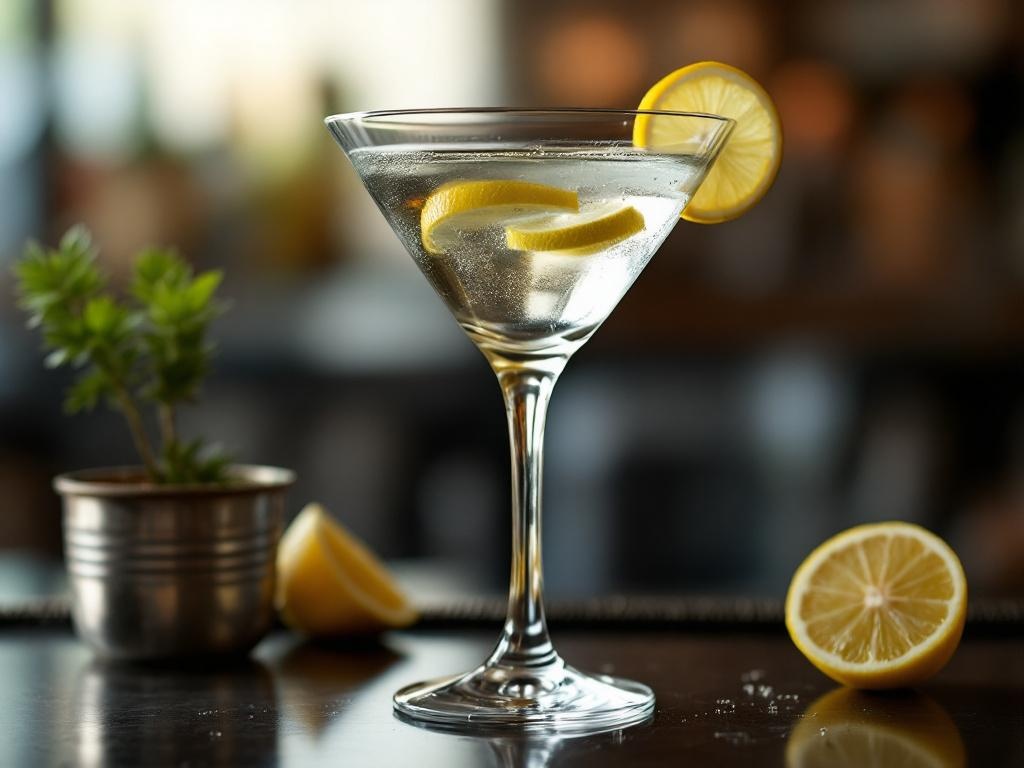
Elevating the Vodka Martini: Bartender’s Secrets Unveiled
The Vodka Martini has long been a staple in the classic cocktail repertoire, offering a smooth and versatile base that allows the nuances of vermouth and garnishes to shine. Emerging as a modern rival to the gin-based Gin Martini, the Vodka Martini has gained fame through its association with the legendary James Bond and his iconic “shaken, not stirred” order.
Key Takeaways:
- Vodka Martini provides a neutral base that highlights vermouth and garnishes
- Ratios have evolved from 3:1 to modern dry versions at 5:1, 6:1, or even 15:1 (“Montgomery”)
- Precise preparation techniques like stirring, double-straining, and expressing oils elevate the drink
- Classic and creative garnishes like lemon twist, olives, or caperberries can add a personal touch
The Evolution of the Vodka Martini
The Vodka Martini emerged as a modern twist on the classic Martini, substituting the traditional gin base with a more neutral spirit that allows the vermouth and garnishes to take centre stage. This evolution gained traction in the 1930s, with the ratio of vodka to vermouth shifting from 3:1 in the earlier decades to 4:1 by the 1940s. Today, the dry Martini is commonly served at a 5:1, 6:1, or even 15:1 (“Montgomery”) ratio, showcasing the versatility of the Vodka Martini and its ability to cater to a range of personal preferences.
The Classic Vodka Martini Recipe
The standard Vodka Martini recipe calls for 60ml of premium vodka and 10ml of dry white vermouth, stirred or shaken with ice and strained into a chilled glass. For a drier version, the vermouth can be reduced to as little as 0.5oz, creating a 5:1 or even 6:1 ratio. Conversely, a “wet” Martini uses a more generous 30ml of vermouth, while a “50/50” split features equal parts vodka and vermouth. An example of a classic Vodka Martini might be 5cl of Potocki Rye Vodka, 2.25cl of Mancino Secco Vermouth, and a couple of dashes of orange bitters, garnished with three olives.
Bartender’s Preparation Secrets
The key to a truly exceptional Vodka Martini lies in the preparation techniques employed by skilled bartenders. Stirring the drink for approximately 30 seconds results in a silky, smooth texture, while shaking it for 10-15 seconds creates a more aerated, dry Martini. Some bartenders even go so far as to rinse the glass with vermouth to achieve a “bone dry” profile, using large ice cubes to minimise dilution and double-straining to remove any ice shards. The final touch involves expressing the oils from a lemon twist over the rim of the glass, adding a delicate citrus aroma to the overall experience.
Garnishes and Twists
The classic Vodka Martini is typically garnished with a lemon peel twist or one to three olives. The “with a twist” variation refers to squeezing the lemon peel over the drink to release its aromatic oils. However, bartenders have also embraced alternative garnishes, such as the Gibson (with a pickled onion), the Filthy (with a caperberry), and the Gypsy (with a maraschino cherry, plus 1-2 teaspoons of the accompanying syrup). For those who prefer a “Dirty” Martini, a few teaspoons of olive brine can be added to the mix, creating a savoury and briny twist on the classic.
Conclusion
The Vodka Martini has evolved from a modern rival to the gin-based classic to a beloved staple in its own right. By understanding the history, ratios, and preparation techniques, as well as the diverse range of garnishes and twists, you can elevate your Vodka Martini experience and impress your guests with your bartender-level expertise. Whether you prefer a dry, wet, or 50/50 version, the key is to experiment, explore, and discover the Vodka Martini that best suits your personal taste.
Sources:
The Martini Socialist
Tasting Table
Make Me a Cocktail
On the Sauce Again
Wikipedia
Augustine Bar
