


Bourbon Mixed Drinks: Timeless Choices
Bourbon, the quintessential American spirit, has captivated the global palate with its rich history and versatile flavour profile. From its roots in Kentucky to its modern-day resurgence, this celebrated liquor continues to inspire innovative bourbon mixed drinks that delight and intrigue drinkers worldwide.
Key Takeaways
- Bourbon’s origins trace back to the late 18th century, when European settlers brought distilling to Kentucky
- The industry faced challenges during Prohibition and wars, but the “bourbon boom” has fuelled a sustained revival
- Classic bourbon cocktails like the Old Fashioned and Mint Julep remain iconic, while modern twists showcase bourbon’s versatility
- Pairing bourbon with foods like smoked beef jerky, chocolate, and pickles can enhance its flavour profile
- Global demand for premium and small-batch bourbons has grown, driven by collectors and enthusiasts
Tracing the Origins of Bourbon
Bourbon’s roots in Kentucky date back to the late 18th century, when Scots, Scots-Irish, and other European settlers brought distilling to the region[1][3][5]. The name “bourbon” may derive from Bourbon County, Kentucky or Bourbon Street in New Orleans, a major distribution hub[1][5]. Early commercial production began in the 1780s and 1790s, with pioneers like Elijah Craig and Jacob Spears[3][5]. The Whiskey Rebellion of 1794 and the Excise Whiskey Tax of 1789 shaped the industry, consolidating production[1][3]. In 1964, U.S. Congress formally defined bourbon’s legal standards: at least 51% corn, aged in new, charred oak barrels, and produced in the U.S.[1]
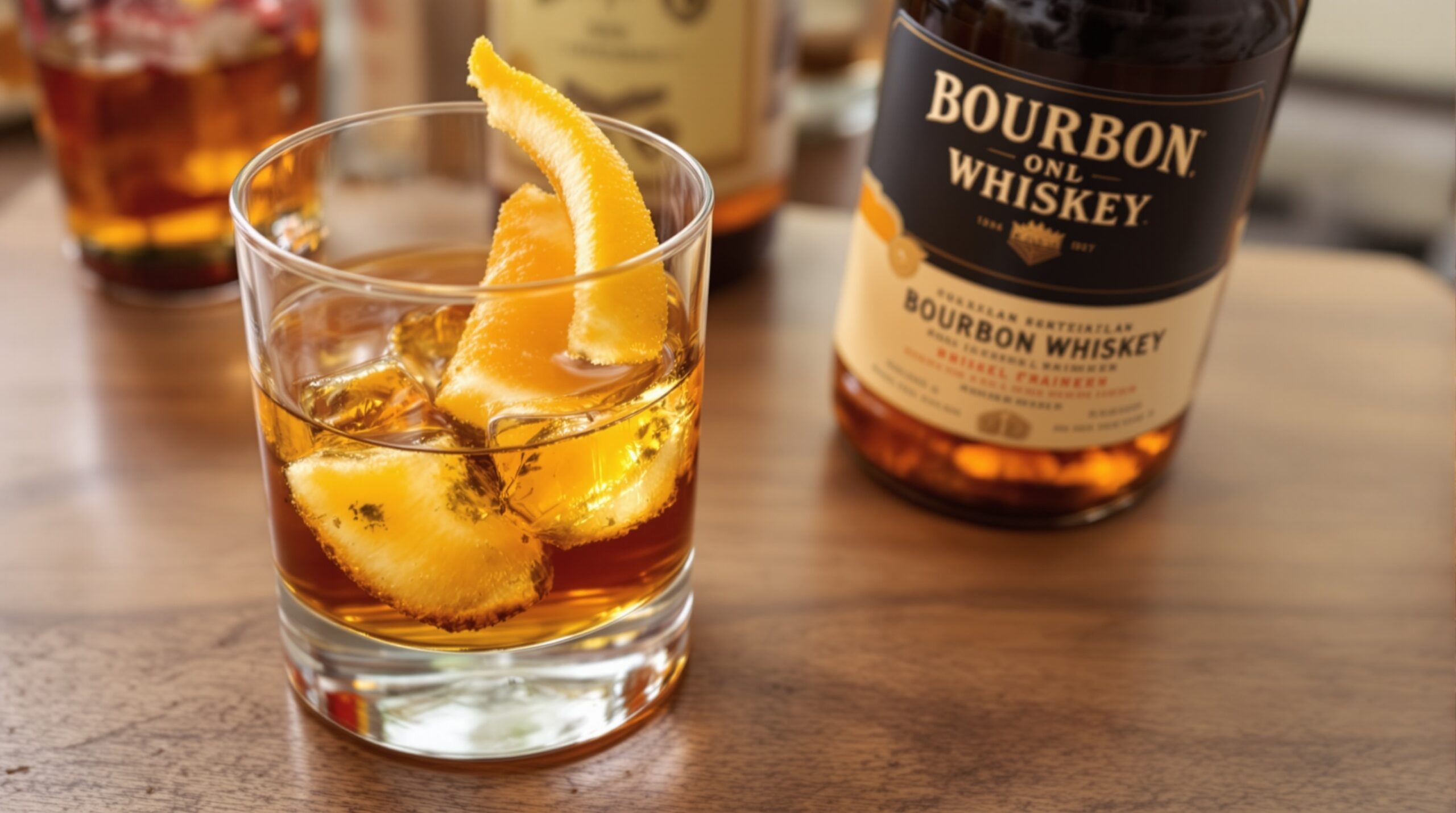
As of 2014, U.S. distillers’ wholesale market revenue for bourbon was about £2.1 billion, accounting for two-thirds of the £1.3 billion U.S. whiskey export market[5].
The Global Bourbon Boom
Bourbon has experienced a global renaissance, with U.S. exports growing steadily and representing about two-thirds of all U.S. whiskey exports by 2014[5]. Premium and small-batch bourbons have surged in popularity, with collectors and enthusiasts driving demand for limited releases and single-barrel offerings[1]. The industry faced challenges during Prohibition (1919–1933) and World Wars, but post-war recovery and modern cocktail culture have fuelled a sustained “bourbon boom”[1]. Customs duties and international trade policies continue to impact global availability as of 2025[1].
Classic Bourbon Cocktails
The Old Fashioned (bourbon, sugar, bitters, orange peel) and Mint Julep (bourbon, mint, sugar, crushed ice) are iconic, with the Mint Julep famously associated with the Kentucky Derby[4]. The Whiskey Sour (bourbon, lemon juice, simple syrup, optional egg white) is a tart, refreshing staple[4]. The Manhattan (traditionally rye but often made with bourbon: bourbon, sweet vermouth, bitters, cherry/orange garnish) is a sophisticated choice[4]. Modern variations include the Revolver (bourbon, coffee liqueur, orange bitters) and Bourbon Hot Toddy (bourbon, honey, lemon, cinnamon, hot water)[4][6].
Bourbon and Food Pairings
Smoked beef jerky complements bourbon’s sweetness and enhances darker, oaky notes; candied jerky pairs well with caramel-forward bourbons[2]. Chocolate (milk, dark, or white) matches bourbon’s vanilla, caramel, and spice; milk chocolate is versatile, white chocolate suits wheated or lighter bourbons, dark chocolate works with sweeter, bolder bourbons[2]. Butter cookies highlight vanilla and toffee notes, especially in high-rye bourbons[2]. Pickles (dill, bread & butter, sweet) offer salty, tangy contrast to bourbon’s sweetness; picklebacks (whiskey chased with pickle brine) are a popular bar tradition[2].
Conclusion
Bourbon’s enduring appeal is a testament to its rich history, diverse flavour profile, and ability to inspire creative bourbon mixed drinks and food pairings. Whether enjoyed in a classic cocktail or savoured neat, this American spirit continues to captivate drinkers worldwide with its timeless charm and evolving sophistication.
Sources:
National Park Service
Liquor.com
Discover Bourbon Country
The Spruce Eats
NPR
