

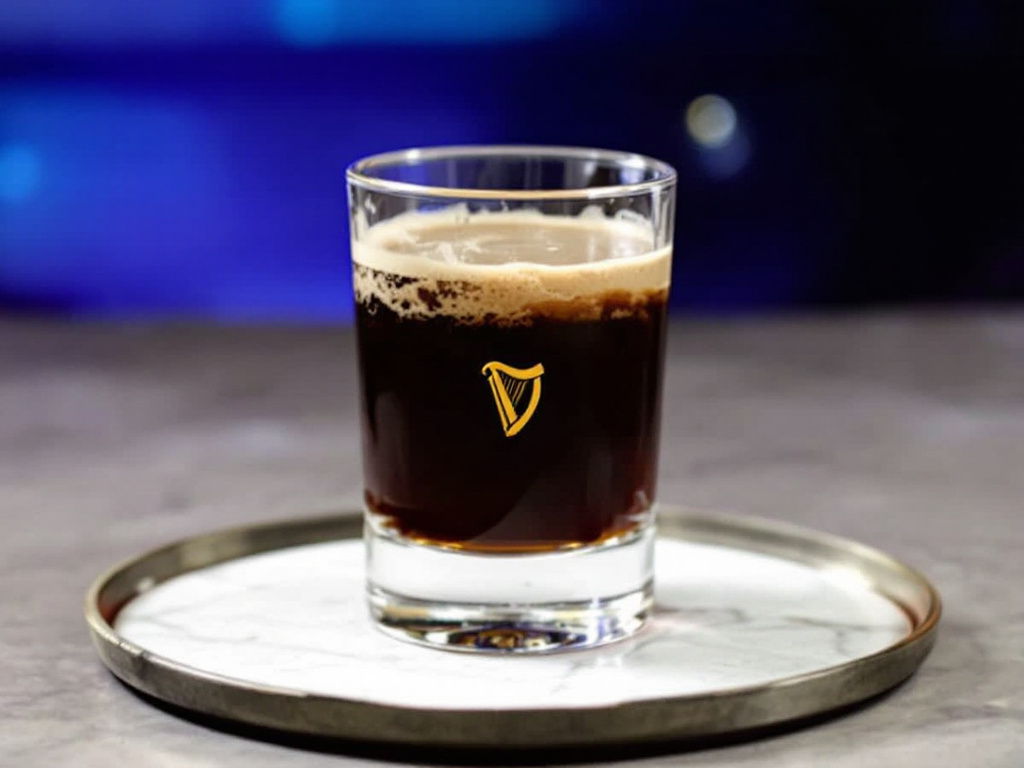
The Baby Guinness is a clever novelty shot that mimics the appearance of a pint of Ireland’s famous stout, yet contains no beer whatsoever. Its layered look comes from just two baby guinness ingredients: chilled coffee liqueur topped with a floating layer of Irish cream, creating the iconic dark body and creamy head.
Key Takeaways
- The classic recipe uses only two spirits: Kahlúa and Baileys Irish Cream.
- Correct layering technique relies on pouring the cream slowly over the back of a spoon.
- The typical ratio is roughly three-quarters Kahlúa to one-quarter Baileys in a shot glass.
- Flavour combines rich coffee sweetness with smooth, whiskey-tinged cream on top.
- Budget-friendly versions cost around £1.50 per shot using supermarket own-brand alternatives.
What Goes Into a Baby Guinness
I’ll start with the basics, because this drink is refreshingly simple. The traditional recipe calls for Kahlúa coffee liqueur as the base, filling roughly three-quarters of a standard 25ml shot glass. Baileys Irish Cream then forms the creamy “head” on top, mimicking the foam of a real pint of Guinness.
However, you don’t have to stick rigidly to these brands. Many bartenders substitute Tia Maria for Kahlúa, or use own-brand Irish cream liqueurs from Aldi, Lidl or Tesco. The result still looks and tastes remarkably close to the original.
The Science Behind the Layered Effect
The visual magic depends on density differences between the two liqueurs. Baileys has a higher fat and sugar content, but its lower alcohol strength and cream base actually let it float when poured gently. Consequently, the darker Kahlúa stays at the bottom while the pale cream sits neatly on top.
To achieve a clean split, I recommend chilling both bottles beforehand. Additionally, pouring the Baileys over the back of a cold teaspoon slows the liquid enough to prevent mixing. This layering trick is similar to techniques used in classic Italian aperitifs, such as those in this Aperol Spritz complete guide.
Taste Profile: What to Expect
The flavour hits in two distinct waves. First, you get the rich, roasted coffee notes of Kahlúa with hints of vanilla and dark sugar. Then the Baileys follows through with smooth cream, a whisper of Irish whiskey, and a touch of cocoa.
Together, they taste rather like a boozy iced coffee dessert. Moreover, the drink finishes sweet rather than bitter, making it popular with people who don’t usually enjoy stronger spirits. For those interested in bitter alternatives, my breakdown of Aperol versus Campari covers a very different flavour direction.
How to Make a Baby Guinness Step by Step
Here’s my straightforward method for a picture-perfect shot every time. Follow these steps carefully for the best layered finish:
- Chill both Kahlúa and Baileys in the fridge for at least an hour.
- Pour Kahlúa into a 25ml or 30ml shot glass until three-quarters full.
- Hold a cold teaspoon just above the Kahlúa, curved side up.
- Slowly pour Baileys over the spoon so it settles gently on top.
- Serve immediately while the layers remain sharp and defined.
If you fancy building a matching cocktail menu, my Aperol Spritz recipe guide pairs beautifully as a lighter aperitif before these richer shots.
Popular Variations and Substitutions
Several twists on the classic have appeared in UK bars over the years. Furthermore, home mixologists often experiment with what’s already in the drinks cabinet.
Here are the most common variations I’ve come across:
- Baby Murphy’s: swap Kahlúa for Tia Maria for a slightly drier coffee note.
- Vegan Baby Guinness: use Baileys Almande or a plant-based Irish cream alternative.
- Espresso Baby Guinness: add a dash of cold espresso to the Kahlúa layer.
- Baby Baileys: reverse the ratio for a creamier, less coffee-forward shot.
- Budget version: use supermarket own-brand liqueurs for around £1.50 per serve.
Cost, Serving and Occasions
A standard bottle of Kahlúa costs roughly £18 to £22 at UK supermarkets, while Baileys sits around £15 to £18 for a 70cl bottle. Own-brand alternatives from Aldi or Lidl typically retail for £8 to £10, making rounds affordable for parties.
The Baby Guinness works brilliantly for St Patrick’s Day on 17 March, Christmas gatherings, and dessert-course shots at dinner parties. Additionally, it’s a reliable crowd-pleaser at hen dos and birthday celebrations because it looks impressive but requires minimal skill.
Common Mistakes to Avoid
I’ve seen plenty of failed attempts, so let me share the pitfalls. Warm liqueurs are the biggest culprit, as they mix rather than layer.
Watch out for these frequent errors:
- Pouring the Baileys too quickly, which causes it to sink and cloud the drink.
- Using a shot glass that’s too narrow, making the spoon technique tricky.
- Skipping the chilling step, which reduces the density difference needed for separation.
- Overfilling the Kahlúa layer, leaving no room for the cream head.
- Stirring the finished shot, which ruins the visual effect entirely.
Final Thoughts
The Baby Guinness proves that two ingredients can create something genuinely memorable when combined with a little care. Its clever appearance, sweet coffee-and-cream flavour, and affordable price point make it a firm favourite in British bars and homes alike. Therefore, whether you’re hosting a St Patrick’s Day party or simply want a fun dessert shot, this little drink delivers every time.
Sources:
Intergovernmental Panel on Climate Change (IPCC), Sixth Assessment Report (AR6)
NASA Goddard Institute for Space Studies (GISS), Global Temperature Analyses
Scripps Institution of Oceanography, Keeling Curve Atmospheric CO₂ Record
U.S. Environmental Protection Agency (EPA), Greenhouse Gas Science and Emissions Data
World Meteorological Organization (WMO), Climate Indicators and Sea Level Reports
International Energy Agency (IEA), Global Energy Review and Emissions Statistics
Munich Re, NatCatSERVICE Reports on Global Disaster Losses
World Health Organization (WHO), Climate Change and Health Fact Sheets
United Nations Framework Convention on Climate Change (UNFCCC), Paris Agreement Documentation and NDC Synthesis Reports
International Renewable Energy Agency (IRENA), Reports on Renewable Energy Costs and Deployment
Pew Research Center, Surveys on Global Climate Attitudes
