


The origins of the word “cocktail” have long been debated, with several theories attempting to explain its derivation. From its first recorded appearances in the late 18th and early 19th centuries, the term has evolved to become a staple in the world of mixology.
Key Takeaways:
- First Printed Mentions: The earliest known printed references to “cocktail” appeared in 1798 in London’s Morning Post and Gazetteer, and in 1803 in The Farmer’s Cabinet, describing it as “excellent for the head”.
- Earliest Definition: The first formal definition of “cocktail” was published in 1806 in the Balance and Columbian Repository, describing it as a “stimulating liquor composed of spirits of any kind – sugar, water, and bitters”.
- French Eggcup Origin: One theory links the term to the French word “coquetier”, meaning eggcup, which was used by New Orleans apothecary Antoine Amédée Peychaud to serve his signature brandy-based drink in the late 18th century.
- Barrel Dregs Theory: Another theory suggests that “cocktail” derived from the practice of mixing the leftover “tailings” or dregs from nearly empty barrels, a common practice in early American taverns.
- Horse Racing Connection: Some historians believe the term was inspired by the practice of “feaguing” horses, where their tails were docked and cocked up, which was thought to energize them, much like the supposed effects of the cocktail drink.
The Earliest Recorded Uses of “Cocktail”
The first known printed use of the word “cocktail” dates back to 1798 in London’s Morning Post and Gazetteer, where it was used in a satirical reference. However, the term did not gain widespread popularity until it appeared in the United States in 1803, when it was described in The Farmer’s Cabinet as “excellent for the head”.
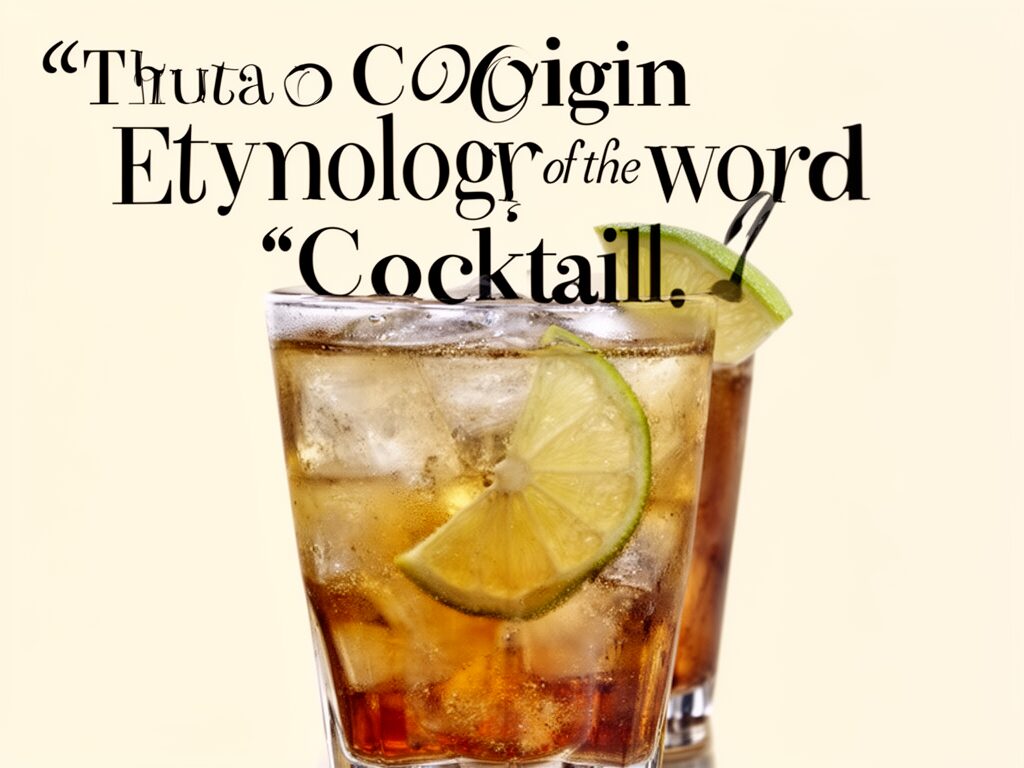
The first formal definition of the term “cocktail” was published on 13 May 1806 in the Balance and Columbian Repository, a newspaper in Hudson, New York. It was described as “a stimulating liquor, composed of spirits of any kind, sugar, water, and bitters” – a description that closely resembles the modern-day cocktail.
The Oxford English Dictionary (OED) cites the earliest known use of the word “cocktail” in 1809, further solidifying its origins in the early 19th century.
The Coquetier Theory (French Eggcup Origin)
One of the more popular theories about the origin of the word “cocktail” links it to the French word “coquetier”, meaning eggcup. This theory suggests that the term was derived from the way New Orleans apothecary Antoine Amédée Peychaud served his signature brandy-based drink, using an eggcup to measure and dispense the ingredients in the late 18th century.
Additionally, some historians believe the term may be connected to a mixed drink called “coquetel” that was served to French officers during the American Revolution in Bordeaux, France.
The Cock Tailings/Dregs Theory
Another theory suggests that the term “cocktail” originated from the practice of mixing the leftover “tailings” or dregs from nearly empty barrels, a common occurrence in early American taverns. In this theory, the word “cock” referred to the spigot or tap on the barrel, and the “tailings” were the remnants that were mixed and sold cheaply.
A variant of this theory proposes that the dregs were stored in bottles with a cock’s tail feathers used as a cork, leading to the term “cockcork” or “cock-tailings”.
The Horse and Racing Theories
Some historians believe the term “cocktail” may have originated from the practice of “feaguing” horses, where their tails were docked and cocked up to make them appear more energetic and lively. This was thought to be similar to the supposed energizing effects of the cocktail drink.
Another theory links the term to a “cocktail” horse, which was a mixed-breed with a docked or cocked-up tail, in contrast to a thoroughbred. This metaphor was then applied to the adulteration of spirits, much like the non-thoroughbred status of the “cocktail” horse.
Conclusion
The derivation of the word “cocktail” has been the subject of much debate and speculation over the years. While the exact origins may never be definitively known, the various theories surrounding its evolution provide a fascinating glimpse into the rich history and cultural influences that have shaped this iconic drink.
Sources:
TASTE cocktails [1]
ALTA Language Services [2]
VinePair [3]
Bols [4]
Angel’s Envy US [5]
camus cognac [6]
OUP Blog – Oxford University Press [7]
Difford’s Guide [11]
etymonline.com [9]
Wikipedia [12]
