


The Sidecar is a classic cocktail that has stood the test of time, tracing its roots back to the early 1920s and becoming a beloved staple in the bars of Paris and London. This iconic drink is a member of the Daisy family, combining a spirit, citrus juice, and a liqueur as a sweetener to create a delightfully balanced and refreshing concoction.
Key Takeaways:
• The Sidecar evolved from the older Brandy Crusta cocktail, differing in presentation and ingredient ratios
• The classic Sidecar features Cognac (or quality brandy), orange liqueur, and fresh lemon juice
• Preparation involves chilling a coupe or martini glass, creating an optional sugar rim, and shaking the ingredients over ice
• The Sidecar is tart, dry, and bracing, best served up in a chilled stemmed glass
• The sugar rim and Cognac-soaked cherries can help balance the cocktail’s flavours
The History and Origins of the Sidecar Cocktail
The Sidecar’s lineage can be traced back to the early 1920s, when it first gained popularity in the bars of Paris and London. The cocktail is classified as a Daisy, a style that combines a spirit, citrus juice, and a liqueur as a sweetener. While the Sidecar evolved from the older Brandy Crusta, it differs in its presentation and the specific ratios of its key ingredients.
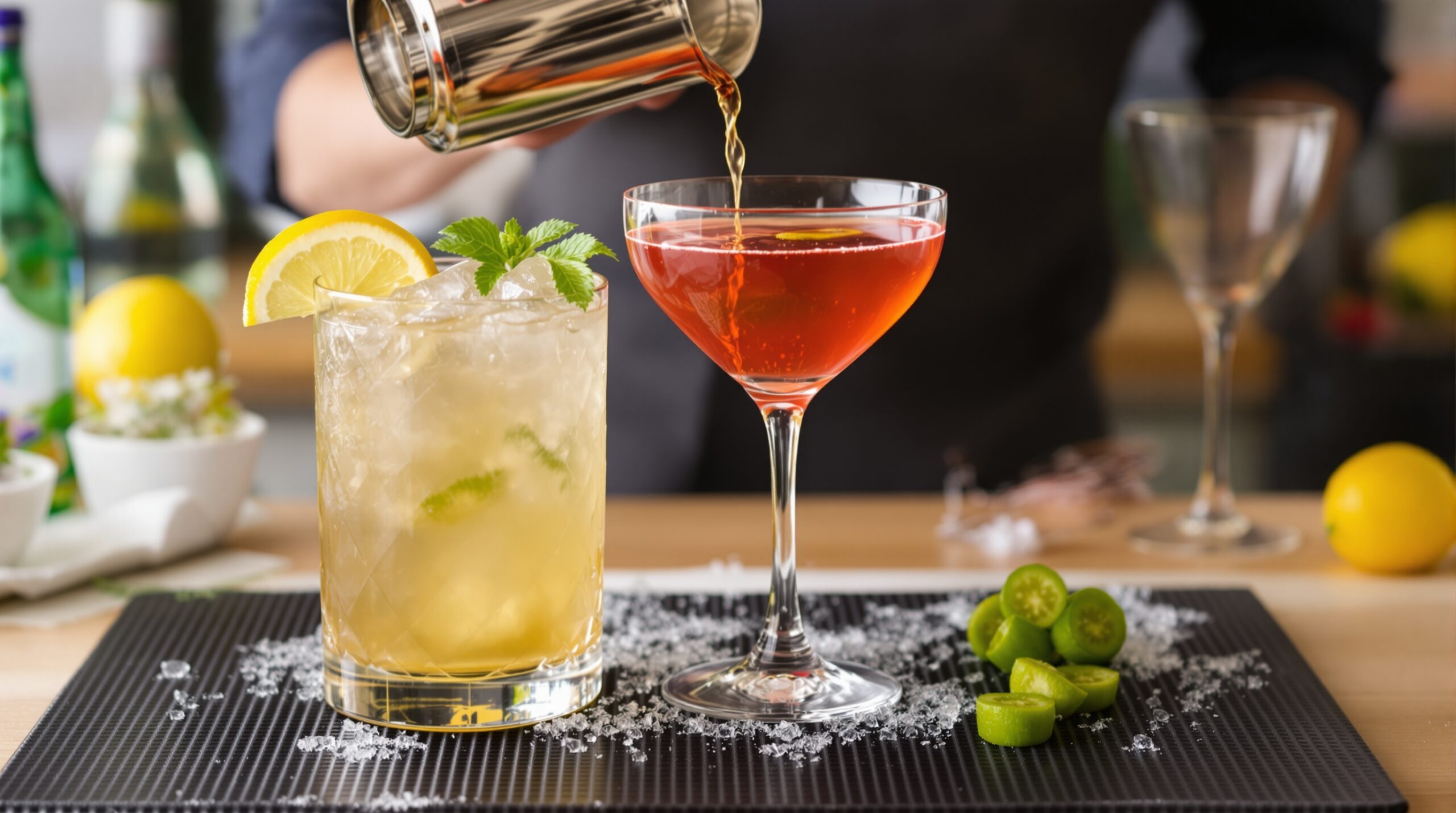
The Sidecar’s popularity is evidenced by its inclusion in early cocktail books, such as “Cocktails How to Mix Them” (1922) and “The Savoy Cocktail Book” (1930), solidifying its status as a timeless classic in the world of mixology.
Key Ingredients and Classic Proportions
The classic Sidecar is composed of three primary ingredients: Cognac (or a quality brandy), an orange liqueur (such as Cointreau, Grand Marnier, triple sec, or dry curaçao), and freshly squeezed lemon juice.
When it comes to the ratios, there are a few schools of thought:
– The French school favors an equal parts (1:1:1) approach.
– The English (Savoy) school leans towards a 2:1:1 ratio.
– The Embury (drier style) recipe calls for an 8:1:2 ratio.
– The Difford/Contemporary school suggests a 3:2:2 ratio, which is considered a balanced “middle ground” between the other styles.
For the orange liqueur, both Cointreau and Grand Marnier are excellent choices, as they both have a 40% ABV, helping to balance the flavour and proof of the cocktail.
Step-by-Step Instructions for Preparation
To craft the perfect Sidecar, follow these steps:
1. Chill a coupe or martini glass before preparation.
2. (Optional) Prepare a sugar rim: Dip the glass rim in lemon juice, then into granulated sugar.
3. Build the cocktail in a shaker: Combine the Cognac, orange liqueur, and fresh lemon juice over ice, then shake vigorously for 6-10 seconds.
4. Strain the mixture into the prepared glass and serve “straight up” (no ice in the glass).
5. Garnish with an orange peel, lemon twist, or a skewer of Cognac-soaked cherries.
Taste Profile and Serving Tips
The Sidecar is known for its tart, dry, and bracing flavour profile, which can sometimes be considered a challenging drink for new bartenders to master due to the balance between sour, sweet, and spirit.
The cocktail is meant to have a noticeable kick and is best served up in a chilled stemmed glass. The sugar rim can help to balance the tartness, and the addition of dried cherries soaked in Cognac can provide an extra layer of flavour.
Conclusion
The Sidecar is a timeless classic that has stood the test of time, tracing its roots back to the early 1920s and becoming a beloved staple in the bars of Paris and London. With its tart, dry, and bracing flavour profile, the Sidecar is a cocktail that is sure to impress and delight both novice and seasoned drinkers alike. Whether you prefer the French, English, or contemporary style, mastering the art of the Sidecar is a must for any aspiring mixologist.
Sources:
Wikipedia, “Sidecar (cocktail)”
Leite’s Culinaria, “Sidecar Cocktail”
Robb Report, “How to Make a Sidecar, the Classic Cognac Cocktail”
BBC Good Food, “Sidecar cocktail recipe”
