


The Negroni is a beloved cocktail renowned for its perfect balance of flavors. As the measurements used to craft this classic drink can significantly impact its overall profile, understanding the ideal ratios is essential for mixology enthusiasts. Negroni Measurements: Perfect Ratios for Balance explores the various approaches to crafting the perfect Negroni, ensuring your next one is a true masterpiece.
Key Takeaways
- The traditional 1:1:1 Negroni ratio uses equal parts gin, sweet vermouth, and Campari, resulting in a bold and bitter profile
- A modified gin-forward ratio of 1.5 oz gin, 1 oz sweet vermouth, and 0.75 oz Campari allows the gin and vermouth nuances to shine through
- An alternative balanced ratio of 0.75 oz Carpano Antica Formula vermouth, 0.75 oz Campari, and 1.5 oz gin appeals to those who find the classic formula too sweet
- Proper preparation technique, including stirring for approximately 30 seconds, is essential for achieving the perfect Negroni
- Adjusting the proportions based on personal preference can help you find your perfect Negroni
The Classic 1:1:1 Negroni Ratio
The traditional Negroni is made with equal parts gin, sweet vermouth, and Campari[1][2][3]. This standard measurement, often 1 oz of each ingredient, has a reputation for being bold and bitter, with the Campari often overpowering the other flavors[1].
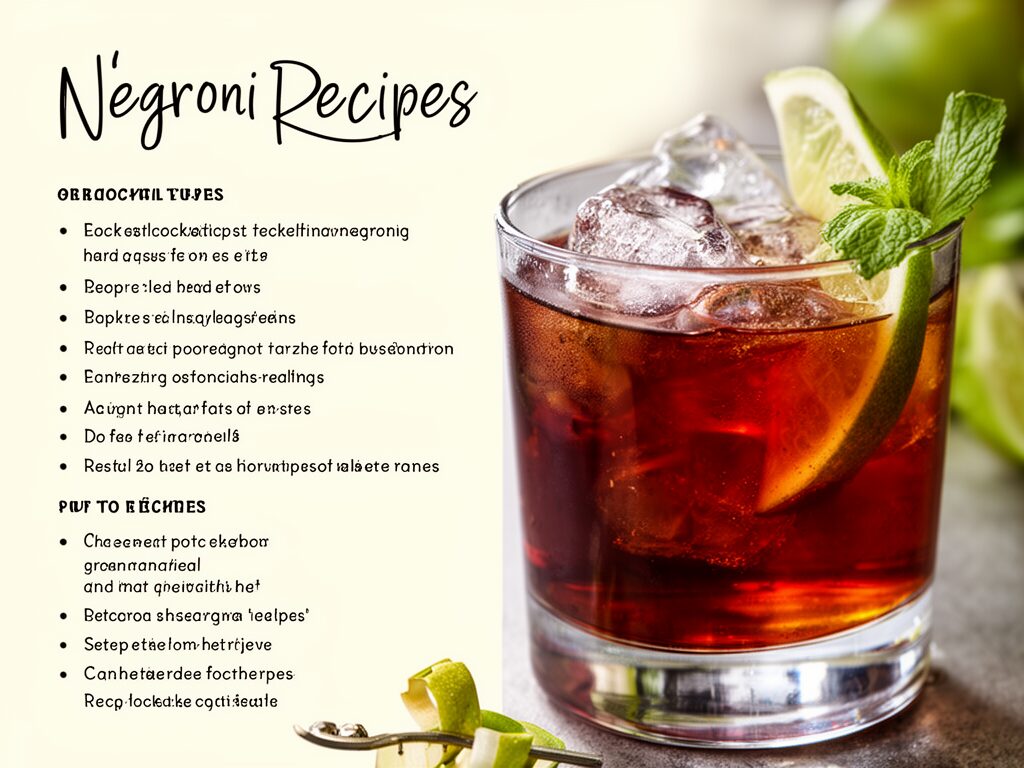
Gin-Forward Ratio for Better Balance
To achieve a more balanced Negroni, a modified ratio can be used. This approach reduces the bitterness while still maintaining the drink’s essential character[1]. The specific measurements are 1.5 oz gin, 1 oz sweet vermouth, and 0.75 oz Campari[1]. This gin-forward ratio allows the nuances of the gin and vermouth to shine through, while still providing the essential bitter edge from the Campari[1]. Compared to the classic 1:1:1 ratio, this version uses 50% more gin than Campari.
Alternative Balanced Ratio
Another variation on the Negroni formula uses 0.75 oz Carpano Antica Formula vermouth, 0.75 oz Campari, and 1.5 oz gin[4]. This ratio appeals to those who find the classic 1:1:1 formula too sweet[4]. Drinkers can adjust the proportions based on their personal preference, starting with the classic ratio and modifying it as needed[2].
Preparation Technique and Serving
Stirring is essential for crafting the perfect Negroni, not shaking[1][2]. Mixologists recommend stirring the ingredients for approximately 30 seconds until the mixing glass is frosty and the drink is thoroughly chilled[1][2][3]. This ensures proper dilution, with about 30 rotations of a long-handled bar spoon[2]. The Negroni is then served in a rocks glass filled with fresh ice or one large cube[1][2][3]. The traditional garnish is an orange peel, twisted over the drink to release the oils[1][2][3].
Conclusion
The Negroni is a captivating cocktail that offers a versatile canvas for experimentation. Whether you prefer the classic 1:1:1 ratio, the gin-forward approach, or an alternative balanced formula, adjusting the measurements can help you find the perfect Negroni to suit your taste. By understanding the nuances of Negroni measurements and the art of proper preparation, you can elevate your cocktail experience and impress your guests with your mixology skills.
Sources:
[1] The Perfect Negroni Recipe (Best Gin & Ratio for Less Bitterness) – Noble Pig
[2] How to Make a Perfect Negroni Cocktail – Moody Mixologist
[3] How to Make a Perfect NEGRONI; it’s SO Easy! – YouTube
[4] The best Negroni recipe (alcohol and alcohol free) – I Am A Food Blog
Sources:
The Perfect Negroni Recipe (Best Gin & Ratio for Less Bitterness) – Noble Pig
How to Make a Perfect Negroni Cocktail – Moody Mixologist
How to Make a Perfect NEGRONI; it’s SO Easy! – YouTube
The best Negroni recipe (alcohol and alcohol free) – I Am A Food Blog
