


The non-alcoholic drinks market is undergoing a remarkable transformation, with consumers increasingly seeking out alcohol-free alternatives that cater to their evolving preferences and lifestyles. From sparkling waters to functional beverages, the zero-proof revolution is redefining the way we think about our daily drink choices.
Key Takeaways:
- The global non-alcoholic drinks market is projected to reach £2,100.4 billion by 2033, growing at a CAGR of 8.2%.
- The sober-curious trend is driving demand, with 90% of category growth from zero-alcohol products.
- Sparkling waters/seltzers are the fastest-growing segment, while functional beverages hold the largest share.
- Asia Pacific is the largest and fastest-growing regional market, driven by rising incomes and urbanisation.
- 2026 is expected to be a breakout year for the non-alcoholic revolution.
The Booming Non-Alcoholic Drinks Market
The global non-alcoholic drinks market is projected to reach an impressive £2,100.4 billion by 2033, growing at a CAGR of 8.2% according to a recent report. However, other estimates show the market reaching an even more substantial £2.85 trillion by 2035 at a CAGR of 3.78%, with Asia Pacific holding the largest share and fastest growth.
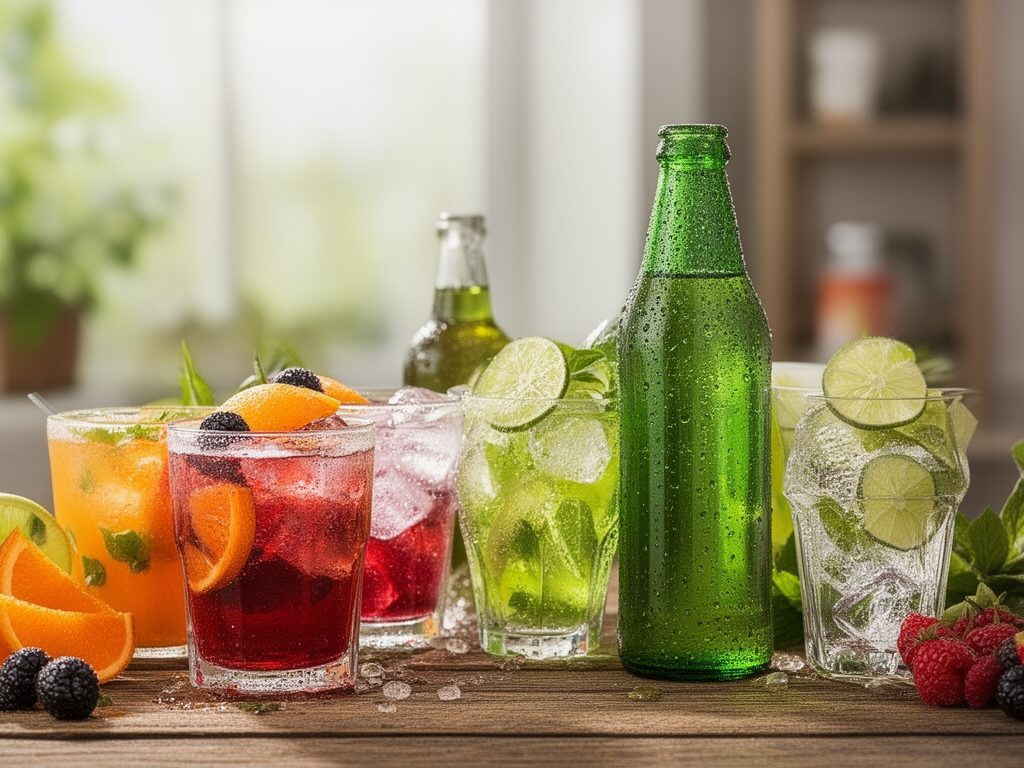
Non-alcoholic beverages grew approximately 10% in 2024, outpacing alcoholic categories, with projections to £1,997.25 billion by 2030 at 7.4% annually. Interestingly, non-alcoholic RTD beverages are expected to grow from £847.69 billion in 2026 to £1,412.21 billion by 2034 at 6.59% CAGR, led by non-fermented types.
The Rise of Sober Curious and Zero-Proof Trends
The sober-curious lifestyle is a significant driver behind the demand for non-alcoholic options, with 90% of category growth coming from zero-alcohol products. No-alcohol beer and cider account for 70% of total growth in the non-alcoholic market.
The non-alcoholic market is expected to grow from £298.4 billion in 2024 to £457 billion by 2030 at 7.4% annual growth, including non-alcoholic wines and beers. Interestingly, 2026 marks a breakout year for the non-alcoholic revolution, driven by increased health consciousness, flavor innovation, and improved infrastructure for non-alcoholic alternatives.
Top Zero-Proof Beverage Categories and Products
Sparkling water/seltzers are the fastest-growing segment in the non-alcoholic drinks market. Functional beverages hold the largest share in 2025, with electrolyte waters and protein shakes catering to fitness enthusiasts.
Exciting innovations include botanical-infused sparkling waters and beverages with adaptogens and probiotics. Examples include Svami’s 2 Cal Cola (sugar-free, keto) and Salted Lemonade (low-sugar, natural lemons), as well as AB InBev’s Fusion energy drink (double-digit growth).
Regional Insights
Asia Pacific holds the largest share (35.39%) of the RTD non-alcoholic market in 2025 and is the fastest-growing region. China’s growth is driven by rising incomes and the growing middle-class, while India’s is driven by urbanisation and a young population favouring Ayurvedic and low-sugar options.
The US leads North America with a focus on health, with key players like PepsiCo and Nestle, while Europe grows via low-calorie and plant-based options in Germany, France, and the UK.
Conclusion
The non-alcoholic drinks market is undergoing a transformative shift, driven by evolving consumer preferences and an increasing health-conscious mindset. From sparkling waters to functional beverages, the zero-proof revolution is redefining the way we think about our daily drink choices. As the market continues to grow and innovate, non-alcoholic options are poised to become an integral part of our beverage landscape, catering to the diverse needs and preferences of health-conscious consumers.
Sources:
Persistence Market Research
Precedence Research
Botrista
Protis Global
Fortune Business Insights
Ansira
