


The Sidecar cocktail has long been a staple in the world of mixology, with a rich history and enduring appeal. Originating around the end of World War I, this classic drink has evolved from its roots as a variation of the Brandy Crusta, a 19th-century New Orleans concoction.
Key Takeaways:
- The Sidecar cocktail is believed to have originated in either London or Paris around the end of World War I.
- The classic recipe features a blend of cognac, orange liqueur, and lemon juice, often in a 2:1:1 ratio.
- The drink offers a balanced profile of sweet, citrus, and sour flavours, with an aromatic note from the orange liqueur.
- Countless variations of the Sidecar exist, using alternative base spirits like whiskey, rum, or gin.
- The Sidecar has maintained its popularity as a classic cocktail, inspiring new bartenders and often associated with elegance.
The Origins and History of the Sidecar Cocktail
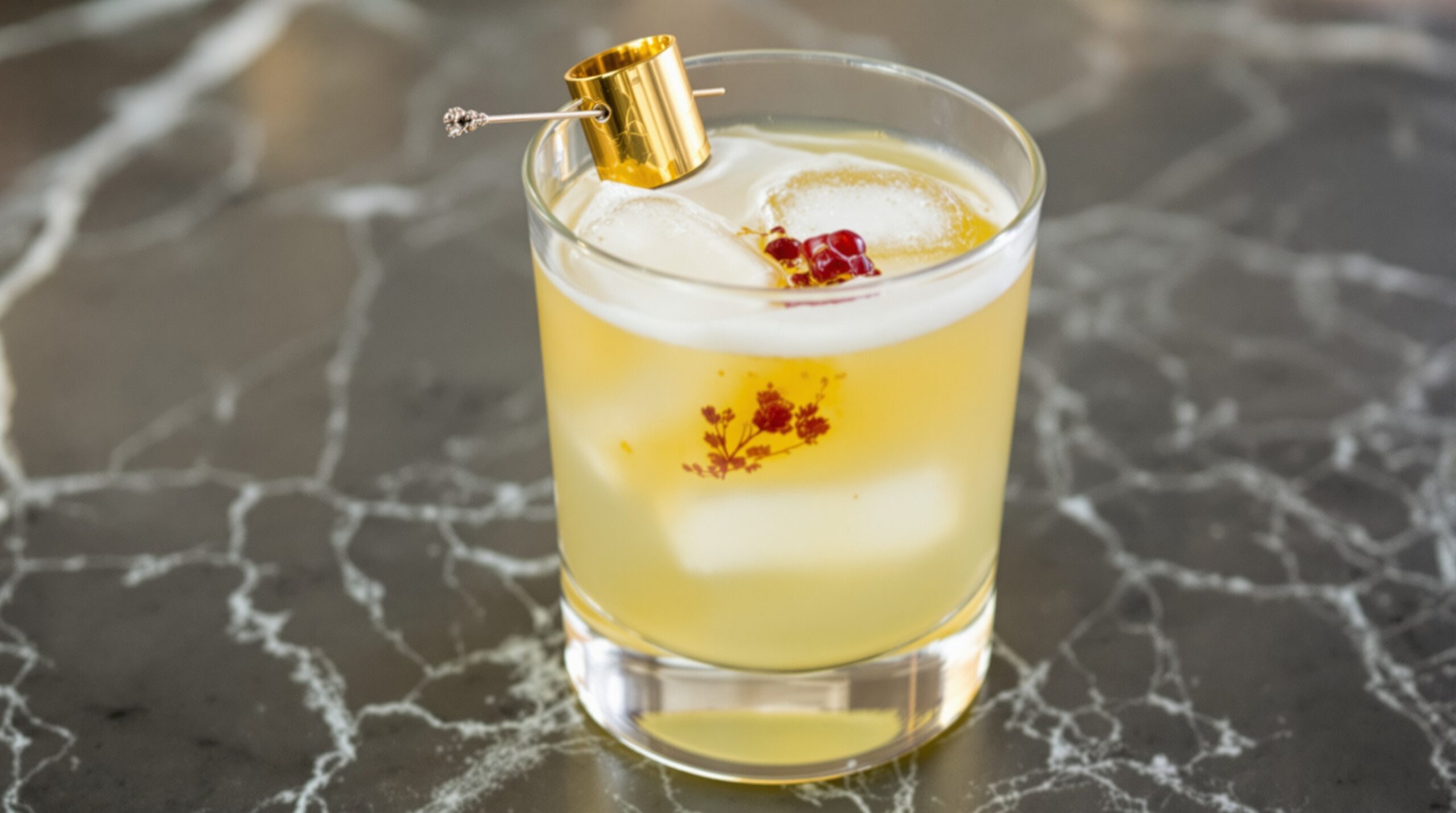
The origins of the Sidecar cocktail are somewhat disputed, with both London and Paris frequently cited as possible birthplaces. The first published recipes for the drink appeared in 1922, in Harry MacElhone’s “Harry’s ABC of Mixing Cocktails” and Robert Vermeire’s “Cocktails and How to Mix Them”. The Sidecar is considered an evolution of the older Brandy Crusta, a 19th-century New Orleans drink featuring brandy, maraschino liqueur, curaçao, lemon juice, and bitters, with a sugar-rimmed glass. The Ritz Hotel in Paris even claims to be the original home of the Sidecar.
The Classic Sidecar Recipe and Key Ingredients
The classic Sidecar recipe contains three main ingredients: cognac, orange liqueur (such as Cointreau, Grand Marnier, or triple sec), and lemon juice. A standard ratio is typically 2:1:1 or equal parts (“French school”) of cognac, Cointreau, and lemon juice. A common ingredient measurement would be 2 oz cognac, 3/4 oz Cointreau, and 3/4 oz lemon juice. The drink is then shaken with ice and strained into a coupe or cocktail glass, which may have a sugared rim for added sweetness and presentation.
Flavour Profile and Serving
The Sidecar offers a balance of sweet, citrus, and sour flavours with a distinct aromatic note from the orange liqueur. The use of fresh lemon juice is crucial for brightness and acidity. With a sugared rim, the cocktail becomes sweeter and has added textural contrast. Typically a golden amber in colour, the Sidecar is served either straight up or over ice, and is often garnished with an orange peel or twist for aroma and visual appeal. The average nutritional value is around 235 kcal per serving, with roughly 14g of sugar per glass.
Sidecar Variations and Adaptations
Countless Sidecar variations exist, utilising alternative base spirits. These include the Whiskey Sidecar (bourbon or rye instead of brandy/cognac), the Boston Sidecar (includes rum and brandy), the Between the Sheets (cognac, rum, triple sec, lemon juice), the Vodka Sidecar (vodka base for a lighter profile), the Spiced Sidecar (adds spices like cinnamon or star anise), the Amaro Sidecar (uses amaro for bitter complexity), the Chelsea Sidecar (gin-based), and the Aged Sidecar (rum-based, e.g., Diplomatico Reserva Exclusiva). Changes in ratios and ingredients (swapping Cognac for brandy, using different orange liqueurs) allow for personal taste customisation.
The Sidecar’s Cultural Significance and Legacy
The Sidecar stands as one of the six basic drinks in David A. Embury’s “The Fine Art of Mixing Drinks” (1948), cementing its role among the classic cocktails. It has gained and maintained popularity through Prohibition and beyond, rarely falling out of fashion. The cocktail is widely referenced in cocktail books and programs globally, constantly inspiring new bartenders. The Sidecar is associated with elegance and has a strong presence in upscale bars and hotel lounges, making it a sidecar beverage staple.
Conclusion
The Sidecar cocktail’s rich history, balance of flavours, and versatility have solidified its status as a true cocktail staple. From its origins in London or Paris to its modern-day iterations, the Sidecar continues to captivate and inspire mixologists and cocktail enthusiasts alike. Whether you prefer the classic recipe or one of the many creative variations, the Sidecar remains a timeless and sophisticated choice for any sidecar beverage occasion.
Sources:
Loop Magazine, “The History Of The Sidecar Cocktail”
A Bar Above, “Sidecar”
Alcohol Professor, “Classic Cocktails in History: the Sidecar”
Chilled Magazine, “Classic Drink in History & Recipe: The Sidecar”
Ugly Duckling Bakery, “Sidecar Cocktail Variations”
Whistling Andy, “History of the Sidecar Cocktail”
The Three Drinkers, “The Best Sidecar Variations”
Strain Over Ice, “Sidecar Variations”
Everyday Drinking, “Cognac Cocktails Beyond the Sidecar”
Revelry Tours, “The History of Sidecar Cocktail”
Chilled Magazine, “Classic Drink in History & Recipe: The Sidecar”
A Bar Above, “Sidecar”
Whistling Andy, “History of the Sidecar Cocktail”
