

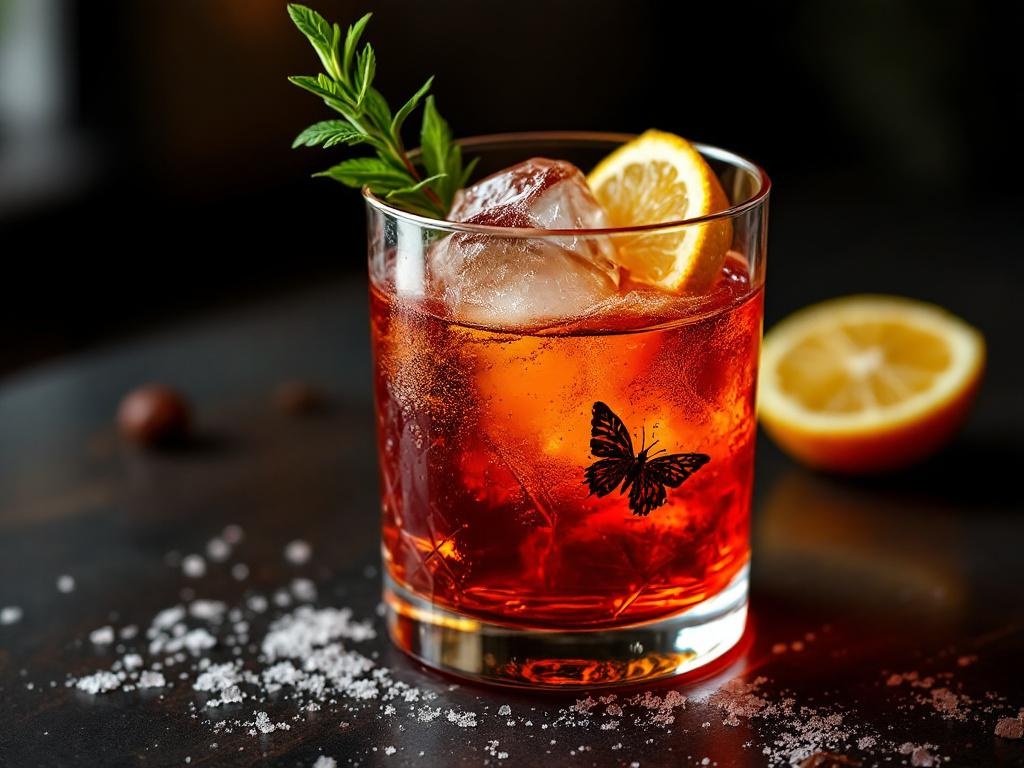
The classic Negroni cocktail is a timeless Italian drink that has captured the hearts and taste buds of cocktail enthusiasts around the world. Originating in Florence, Italy, around 1919, this bittersweet concoction has become a staple in the world of mixology, renowned for its perfect balance of flavours and its ability to transport imbibers to the enchanting streets of Italy.
Key Takeaways:
- The Negroni was invented in Florence in 1919 when a bartender substituted gin for soda water in an Americano cocktail at the request of Count Camillo Negroni.
- The standard 1:1:1 ratio of gin, Campari, and sweet vermouth provides a balanced, bittersweet profile, but variations exist to suit different palates.
- The essential ingredients are London dry gin, Carpano Antica Formula sweet vermouth, and Campari, along with an orange peel garnish.
- Proper technique involves stirring the ingredients over ice for 30 seconds to achieve the perfect dilution.
- Countless variations of the Negroni, such as the Boulevardier and Negroni Sbagliato, offer exciting twists on the classic recipe.
The Enduring Florence Invention
The Negroni is believed to have originated in Florence, Italy, around 1919 at Caffe Casoni (later Cafe Giacosa) on Via Tornabuoni. According to legend, the cocktail was born when Count Camillo Negroni requested that a bartender named Fosco Scarselli replace the soda water in his Americano cocktail with gin, creating a bolder, more spirit-forward drink. The Americano itself had evolved from the Milano-Torino (Campari and sweet vermouth) invented in the 1860s at Caffe Camparino in Milan.
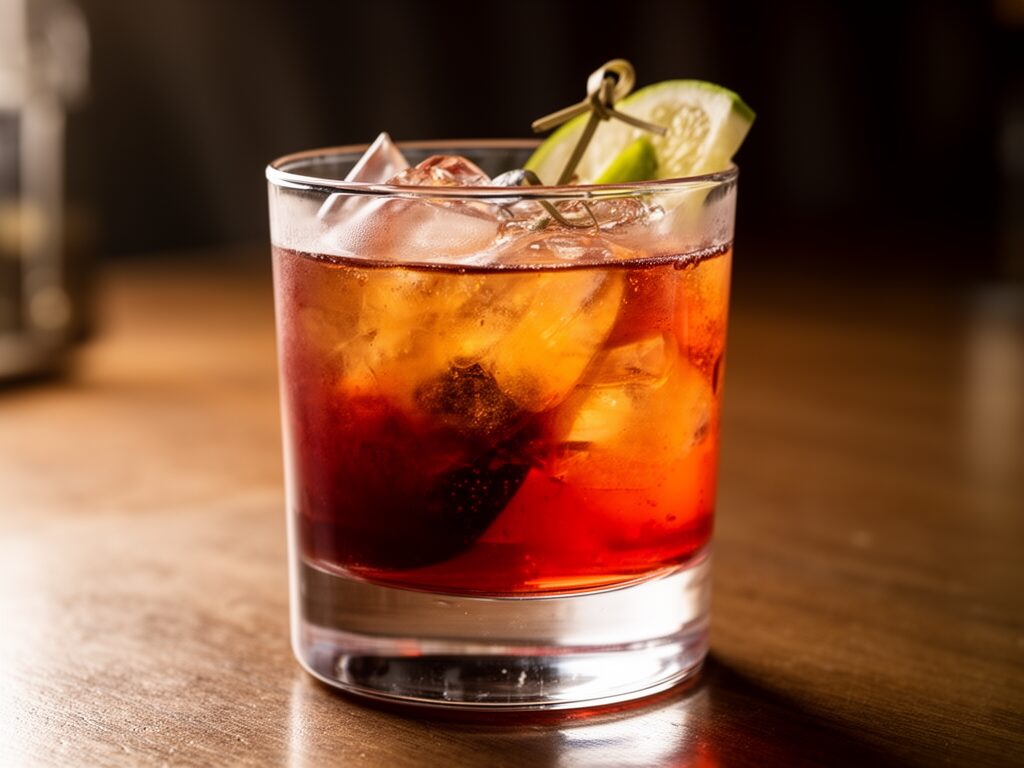
While there are alternative claims about the Negroni’s origins, such as General Pascal Olivier de Negroni inventing a vermouth-based cocktail in Senegal in 1857, the Italian story is the most widely accepted. The Negroni family even founded Negroni Distillerie in Treviso, Italy, in 1919, producing a ready-made version called Angroni Negroni 1919, which is still available today.
The Negroni has also earned the acclaim of notable figures, such as Orson Welles, who famously said, “The bitters are excellent for you, the gin is bad. They balance each other out.”
The Classic Negroni Formula
The standard 1:1:1 ratio of the Negroni (1 oz/30 ml each of London dry gin, Campari, and sweet vermouth) provides a balanced, bittersweet profile that has become the hallmark of this iconic cocktail. However, some variations exist to cater to different preferences, such as a less bitter 1.5 oz (45 ml) gin, 1 oz (30 ml) sweet vermouth, and 0.75 oz (22 ml) Campari.
To prepare the classic Negroni, the ingredients are simply stirred for 30 seconds (or 30 rotations) in a mixing glass with ice until chilled, then strained into a rocks glass over a large ice cube. The final touch is the essential orange peel garnish, which helps to express the citrus oils and complement the drink’s flavour profile.
Essential Ingredients and Brands
The key to a great Negroni lies in the quality of its core ingredients. The most commonly used gin is a London dry style, such as Beefeater, which provides a robust, juniper-forward backbone. For the sweet vermouth, Carpano Antica Formula is a popular and versatile choice. And for the Campari, the standard measurement is between 0.75-1 oz (22-30 ml).
Perfecting the Technique
Crafting the perfect Negroni is not merely a matter of combining the ingredients; it’s an art form that requires attention to detail. The process involves filling a mixing glass or shaker ¾ with ice, adding the gin, Campari, and sweet vermouth, and then stirring for 30 seconds (or 20-25 seconds) to achieve the optimal 20-25% dilution. The mixture is then strained into a pre-chilled rocks glass with a large ice cube, and the final touch is the orange peel garnish, which helps to express the citrus oils and complete the drink.
Variations and Twists
While the classic Negroni is a true masterpiece, the cocktail’s versatility has spawned numerous exciting variations that put their own unique spin on the formula. Some notable examples include:
- Boulevardier: Bourbon instead of gin (1:1:1 ratio)
- Negroni Sbagliato: Prosecco for soda
- Old Pal: Rye, dry vermouth, Campari (1:1:1, drier)
- The Camillo: Gin, white port, Prato vermouth, orange slice, caper berries
- Freezer Negroni: Batched and frozen for a silky texture
These creative interpretations of the Negroni allow mixologists and enthusiasts to explore new flavour combinations while staying true to the core essence of this iconic cocktail.
Conclusion
The classic Negroni is a testament to the enduring power of simplicity and balance in cocktail making. From its humble origins in Florence to its global acclaim, this timeless Italian drink continues to captivate and delight the senses of discerning imbibers around the world. Whether you prefer the traditional 1:1:1 ratio or one of the many exciting variations, the Negroni remains a true masterpiece of mixology that is sure to transport you to the streets of Italy with every sip.
Sources:
Noble Pig: The Perfect Negroni Recipe (Best Gin & Ratio for Less Bitterness)
Assaggio Boston: Where Did the Negroni Originate?
Tayport Distillery: Classic Negroni Cocktail Recipe and Tips
Tuscany Now and More: The Negroni: An Iconic Cocktail Invented in Florence
Moody Mixologist: How to Make a Perfect Negroni Cocktail
Difford’s Guide: Negroni cocktail history
Love and Lemons: Negroni Recipe
Barrelsmith: So Who Invented the Negroni After All?
White On Rice Couple: Best Classic Negroni Cocktail Recipe with Gin
Alcohol Professor: Classic Cocktails in History: The Negroni
Stag Restis: Negroni Cocktail Ingredients: Master The Art Of A Perfect Pour
YouTube: Cocktail History: The Negroni
YouTube: How to Make a Perfect NEGRONI; it’s SO Easy! | C is for Cocktails
BBC Good Food: Classic negroni recipe
