

Introduction
Making rum at home blends the art of fermentation with the science of distillation, producing a spirit that reflects your personal taste. This guide walks through the ingredients, equipment and techniques needed to craft a smooth, flavourful rum from molasses or raw sugar.
Key Takeaways
- Molasses or raw sugar forms the backbone of any homemade rum recipe.
- A reliable yeast strain determines the final flavour profile and alcohol yield.
- Proper fermentation temperature between 25-30°C produces the cleanest wash.
- Distillation requires legal compliance in the UK, as unlicensed stills are prohibited.
- Ageing in oak barrels transforms harsh new spirit into mellow, complex rum.
How to Make a Rum: The Essential Ingredients
Learning how to make a rum starts with sourcing quality ingredients. The base sugar source defines the character of your finished spirit. Blackstrap molasses delivers rich, treacly notes, while raw cane sugar produces a lighter, cleaner profile. Additionally, you’ll need soft water free from chlorine, which can inhibit fermentation.
Here are the core ingredients I use for a traditional batch:
- Blackstrap molasses – roughly 2kg per 10 litres of water
- Raw cane sugar – 1kg to boost fermentable sugars
- Distiller’s yeast or rum-specific yeast strain
- Yeast nutrient to support healthy fermentation
- Dechlorinated water at around 25°C
For every 10 litres, I budget around £15-£25 depending on molasses quality. Furthermore, investing in a decent hydrometer helps track sugar conversion accurately.
Fermentation: Building the Rum Wash
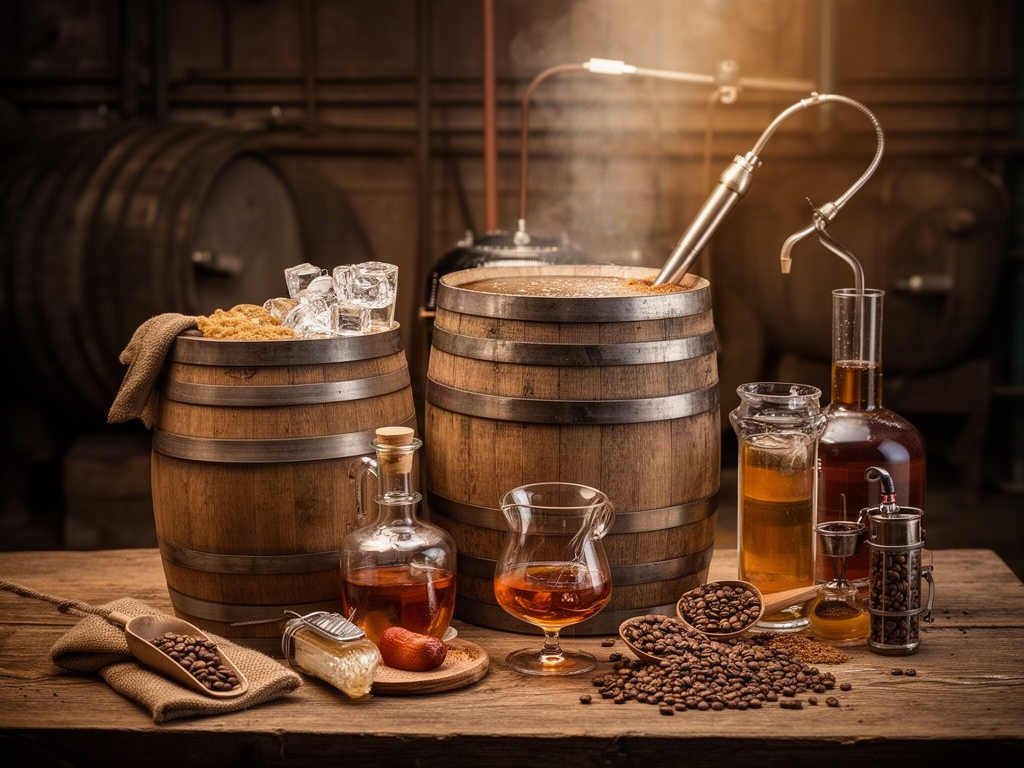
The fermentation stage transforms sugar into alcohol, creating what distillers call the rum wash. I dissolve the molasses and sugar in warm water, aiming for a specific gravity between 1.070 and 1.080. Once the mixture cools to around 28°C, I pitch the yeast and nutrient, then seal the vessel with an airlock.
Several factors influence fermentation success, so I pay close attention to these variables:
- Temperature control – keep the wash between 25-30°C for optimal yeast activity
- Oxygen exposure – minimise it after pitching to prevent off-flavours
- Fermentation time – typically 5-10 days until bubbling stops
- Final gravity – aim for readings below 1.000 for complete conversion
Moreover, some rum makers add a dunder pit or backset from previous batches to develop deeper ester profiles. This technique mirrors traditional Jamaican methods and adds remarkable complexity.
Distillation and Legal Considerations in the UK
Here’s where things get serious: distilling spirits at home without a licence is illegal in the UK. HMRC requires a distiller’s licence before you can legally operate a still, and penalties for unlicensed distillation include heavy fines. Therefore, I always recommend applying for the appropriate licence or partnering with a licensed distillery.
Assuming you’re operating legally, the distillation process typically follows these stages:
- Stripping run – first distillation to separate alcohol from the wash
- Spirit run – second distillation for refinement and cuts
- Heads cut – discard the first 50-100ml containing methanol
- Hearts collection – gather the clean, flavourful middle portion
- Tails separation – stop collecting when the spirit turns oily or weak
The resulting new-make spirit typically sits around 70% ABV. Consequently, I dilute it to roughly 40-50% before ageing or bottling. If you enjoy exploring classic spirits, you might also appreciate my guide to official IBA cocktails for mixologists, which features several rum-based classics.
Ageing, Blending and Serving Your Rum
Fresh rum straight from the still can taste harsh, so ageing mellows the spirit considerably. Oak barrels, typically ex-bourbon or ex-sherry casks, impart vanilla, caramel and spice notes over months or years. For home enthusiasts, oak chips or small 5-litre barrels offer a faster alternative, delivering noticeable character within 3-6 months.
When blending, I consider these flavour-balancing techniques:
- Light and dark blends – combine aged and unaged rums for complexity
- Spice infusions – vanilla pods, cinnamon or cloves for spiced rum
- Fruit maceration – pineapple or orange peel for tropical notes
- Caramel colouring – a small amount deepens visual appeal
Once bottled, your homemade rum works brilliantly in cocktails. For example, I love mixing it into daiquiris, mojitos or more adventurous drinks. If you fancy expanding your mixology repertoire, my guide to amaretto cocktails pairs beautifully with aged rum variations. Additionally, serious cocktail enthusiasts might enjoy comparing rum-based classics to the Negroni’s bold ingredients for inspiration.
Conclusion
Crafting rum at home rewards patience, precision and a willingness to experiment. From selecting quality molasses to managing fermentation and respecting UK distillation laws, each step shapes the final character of your spirit. Furthermore, ageing and blending offer endless opportunities to develop a signature style. With the right approach, you’ll produce a rum that rivals commercial bottlings and reflects your personal craft.
Sources:
